Cry for reformulation of our International Girmitiyan Identity
Presentation at the Conference 08 -10 December 2025
Banaras Hindu University (BHU)
Professor Dr Shardhanand Harinandan Singh
© 2025 September 2025
Abstract
This essay sketches the contemporary contours of Indian diaspora studies with a special focus on the Girmitiya (indentured) experience and its afterlives. It argues that a field-sensitive synthesis—here termed “Girmitiyalogy”—integrates archival recovery, transnational social history, digitalization of Girmitiyan Archives, and policy analysis. Drawing on classic scholarships and recent data on remittances, the paper outlines how historical displacement under indenture continues to shape identities, economies, and knowledge production across continents. Are we a diaspora of Indians and for how long?
The need to redefine the collective and international identity is significantly growing. Are we Overseas Citizens of India (OCI), who are not fully Indian citizens, but do have extensive rights in this land? Or are we PIOs citizens who are descendants of Indian indentured servants (Girmitiyas), who permanently settled in the country of indentured labour? In the latter case, all citizens of the colonized countries have their own and different citizenships. A true dilemma with a profound impact on citizenship and Identity.
These and many more questions belong to the field of the interdisciplinary study Girmitiyalogy. To this end, various methods and strategies have since been developed.
In my report, the components are discussed now. We must connect with each other.
I Educational curricula
The curriculum for the Executive PhD & Inclusive Miner is now available. Every university can include these programs now. There are professors and lecturers who are available for a reasonable fee and can support and guide the adoption and implementation processes. In the meantime, the European Institute of Management & Technology has started to register for PhD thesis supervision in the context of Girmitiyalogy for a pilot project. Two PhD candidates are already enrolled in this programme. The plans for the master’s programme are in preparation. The focus is on workers who want to follow these courses as second-chance education. The courses have worldwide acceptance.
Inclusive Miner is available too. Every MA student can choose Girmitiyalogy as an elective at their own University with the required number of credits according to universally applicable standards. But workers can participate online in this study offer. The intention of this offer is to provide knowledge and skills to students and workers who may have to deal with target groups in society, including citizens of Girmitiya origin. Doctors, psychologists, educators, social workers, and policymakers have an interest.
II Mission and Vision: Differences between Girmitiyas and Indian Diaspora
Another compound concerns the Eurocentric word ‘Diaspora’. Studies have long emphasized how mobility produces new forms of community and belonging across borders. In the Indian case, a crucial distinction is that indentured migration after abolition was both legally contractual and coercively structured. A field-sensitive term, “Girmitiyalogy,” centres the documentary, social, and affective worlds of the Girmitiyas and their descendants, linking empirical archive-work to living memory, public history, and digital repatriation. We note that diaspora as a paradigm is marginalizing for us.
We believe in the vision that the group of Girmitiyas worldwide clearly distinguish itself from the rest of the Groups in the Indian Diaspora. In fact, out of necessity on the part of both sides, recruiters and contract workers have ended up outside India, to take over the work of Afro-slaves, albeit at meagre wages. Moreover, these are citizens who do not hold Indian citizenship. In the other cases of the Indian diaspora, both characteristics are missing. Our mission is to give back diverse elements and aspects that connect the Girmitiyas communities to the land of ancestral origin and to reformulate their national and international group identities. I note: There is a cry for reformulation of the collective Identity of the Girmitiyan Community. All of them have their own Nationality, but the same Nature: Hindustani or Bharata nature. So, I am a Sarnami-Hindustani Dutchman.
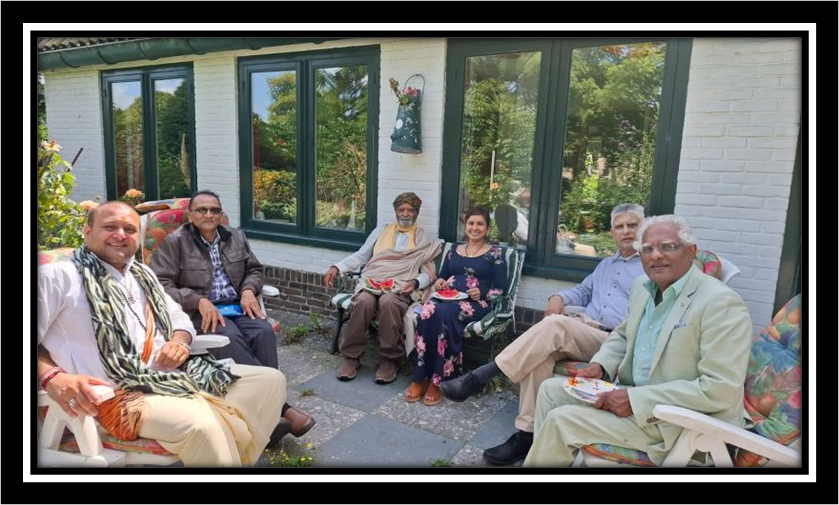
A team of Girmitiya descendants became scientists. Picture: Bina Choenni July 2025. From left to right: Pandit Ravi Gangaram Panday, Dr Kumar Mahabir, Professor Dr Shardhanand Harinandan Singh, Shalima Mohammed MA, Dr August Choenni, and Professor Dr Chan Choenni at a hybrid meeting of Braingain College Girmitiyalogy in Haarlem, The Netherlands, on July 24, 2025.
III Girmityalogy: Concept, Origins, and Institutional Necessity
Girmityalogy may be defined as the systematic, interdisciplinary study of the global histories, cultures, and identities of the descendants of Indian indentured labourers—commonly known as Girmitiyas. As a scholarly field, it brings together archival studies, oral history, digital humanities, sociology, cultural anthropology, and other social studies. Its aim is to decolonize existing narratives and to restore dignity, memory, and continuity to communities historically fragmented by colonial displacement.
Shardhanand H. Singh introduced Girmitiyalogy. Picture: Pranjal Lucknow University.
The term “Girmityalogy” was first coined and introduced in 2025 by Professor Dr. Shardhanand Harinandan Singh, drawing on the colloquial word Girmit—a corruption of “agreement” used by indentured labourers themselves. By merging this term with the Greek suffix -logy (meaning “study of”). The new discipline affirms that the experiences of Girmitiyas warrant a dedicated field of research, equal in status to established disciplines such as Indology, Sociology, Psychology, Education, and Anthropology. Its inception marked the centennial commemorations of indenture arrivals in Suriname and the Caribbean, and it has since gained traction in academic and cultural fora across India, Western Europe, America, the Caribbean, Mauritius, Fiji and beyond.
IV The urgent necessity of Girmityalogy
The urgent necessity of Girmitiyalogy lies in its ability to address several gaps.
• First, while indenture involved more than 1.3 million people across many continents, their descendants remain underrepresented in mainstream scholarship and public history.
•Second, existing archives are scattered and often inaccessible, demanding a coordinated effort of digitization and rewriting as Ithiāsa (truth production).
•Third, the psychosocial consequences of forced migration, broken kinship lines, and hybrid identities require specialized frameworks that neither postcolonial studies nor migration theory have adequately provided.
• Fourth. By foregrounding these aspects, Girmityalogy responds to a long-suppressed history of justice. For instance, the repair of their individual and collective identity.
V Descendants: Distinctiveness within the Indian Diaspora
While the Indian Diaspora is often studied as a single global category, the descendants of the Girmitiyas constitute a distinct subgroup whose historical experiences and cultural trajectories differ fundamentally from those of Indians who emigrated voluntarily in the twentieth and twenty-first centuries. The word diaspora originates from a Eurocentric concept about people who do not live in their country of origin but spread across the world, with the expectation that they will one day return home due to homesickness. To me, I call this a process of marginalization and exclusion of citizens who are fully and consciously integrated into the country that the Europeans have colonized.
Several characteristics set them apart:
• 1 National Belonging Beyond India.
Unlike more recent migrants who retain Indian citizenship or strong legal ties to the Indian state, Girmitiya descendants were born into societies where indenture had severed juridical and civic connections with the homeland. They hold non-Indian nationalities—such as Surinamese, Trinidadian, Guyanese, Fijian, South African, and Mauritian, among others—and have developed political loyalties to their postcolonial nations of residence. This makes their diasporic status qualitatively different from Non-Resident Indians (NRIs) or Persons of Indian Origin (PIOs).
•2 Absence of homesickness for the Homeland.
For Girmitiya descendants, “return” to India is not a practical aspiration, nor is nostalgia for settlement in the ancestral villages a defining sentiment. Unlike first-generation migrants, they do not cultivate a longing to resettle in India. Instead, they have forged stable identities in their host nations over multiple generations.
•3 Hybrid Identity Formation (Hybride Naturality).
• 4 Cultural and Biological Bonds with Bharata.
•5 Persistent Social Challenges.
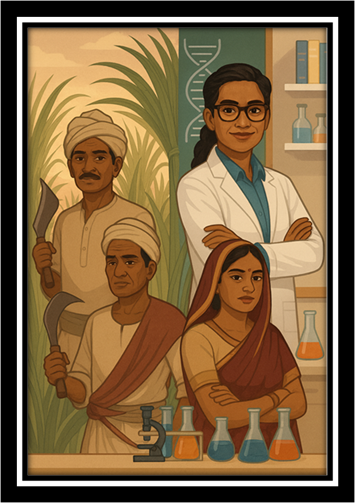
Picture: ChatGPT, Girmitiyas ensured that at least one of their children received a good education. In the Netherlands, their descendants are the best-integrated migrant group.
VI Hybrid identity
The Girmitiya experience has produced identities that are neither replicas of Indian cultural forms nor simple assimilations into host societies. This “hybrid naturality” is expressed in language, religion, cuisine, music, and social customs, blending inherited elements with those of other ethnic groups. This hybridity is not seen as a deficiency but as a generative cultural resource and an inspiration for future intercultural coexistence.
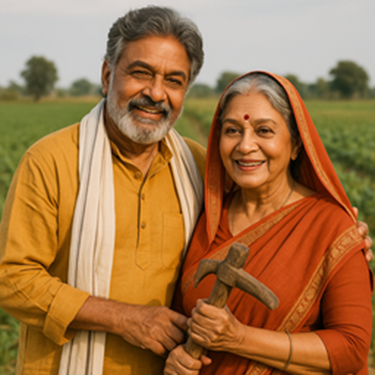
Picture: CHAT GPT: Older descendants of Girmitiyas with different nationalities who dress as Indians on special occasions in their countries. This is also an impact of Bollywood films. However, this is not a daily dress but extends their naturalness.
Despite these differences, Girmitiya descendants remain connected to the wider Indian Diaspora through deep biological, cultural, and spiritual linkages with Bharata. Shared religious traditions, festivals, and symbolic references ensure that India remains a point of reference, even if not a political homeland. Incidentally, it has been scientifically researched and established that the Bollywood productions have had a strong impact on the formation of the hybrid identity of the descendants of the Girmitiyas worldwide.
VII The Role of Girmityalogy
The emerging discipline of Girmityalogy undertakes the scientific fields of digitization of documents, analyzing Girmityan history and archives, and confronting these dynamics from a contemporary perspective. Its mission is to:
•Study the distinct identity formations of Girmitiya descendants across generations.
• Report on discriminatory practices within intra-diasporic relations, including linguistic prejudices.
• Highlight the cultural creativity and resilience of Girmitiya communities as models for hybrid belonging.
• Build comparative frameworks to show how Girmitiyas are both unique and yet integral to the broader Indian culture and heritages.
• To include as equal matters concerning the Indentured labourship, the Girmitiyan life and the existence of the descendants as full citizens of the nations of which they have been a part for more than 150 years.
In doing so, Girmitiyalogy positions itself not only as an academic field but also as an ethical project: to restore dignity, equal recognition, and intercultural respect to a community whose voice has too often been marginalized as a minority.
VIII Objectives
An independent institute of Girmityalogy is necessary to coordinate research, training, and dissemination across continents. Its mission includes:
• Creating a central digital hub for global indenture archives, accessible to both scholars and descendant communities.
• Training a new generation of researchers through structured programs, from minor studies to PhDs.
• Facilitating international conferences, masterclasses, and policy dialogues to ensure global recognition of Girmitiya contributions.
• Promoting a community-centered ethic of scholarship, in which knowledge circulates back to the very people whose histories it represents.
Methodologically: Girmityalogy Institution is intermediary, combining archival recovery (ship lists, contracts, plantation records) with oral traditions and family histories, supported by modern digital technologies for data management and genealogical mapping. It insists on collaborative authorship with descendant communities and adopts a stance that challenges Eurocentric frameworks.
In this way, Girmityalogy is not merely an academic venture but a moral and cultural imperative. It builds a bridge between fragmented pasts and shared futures, reaffirming the Vedic dictum Vasudeva Kutumbakam—One Earth, One Family, One Future.
VIII. Scales and Flows: A Global Cartography
Between the 1830s and the early twentieth century, indenture transported Indians to plantation economies across the British, French, and Dutch empires. A robust scholarly consensus places the overall flow at over 1.3 million persons between 1836 and 1916, with 60,945 arriving in Fiji alone between 1879 and 1916. For the Atlantic world, an estimated 500,000 Indians were shipped to the Caribbean between 1838 and 1917. These scales matter not simply as numbers but as social facts that seeded durable diasporic societies from Mauritius and South Africa to Suriname, Trinidad, and Guyana.
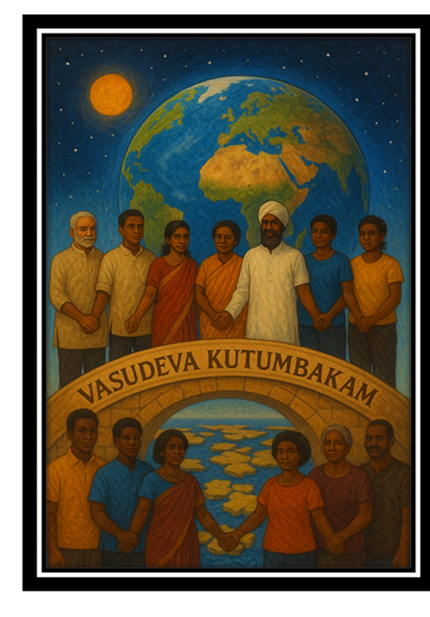
Vasudeva Kutumbkam, Picture ChatGPT.
All descendants of Girmitiyas globally will have to realize that they form a special community with the same characteristics of Hindustani, with an Indian civilization.
Diasporic identities are neither mere survivals of homeland cultures nor simple assimilations. They are negotiated in schools, labour markets, and popular culture—through music, fashion, and media practices that translate South Asian references into new urban idioms. Studies of Indian American youth culture, for instance, show how race, class, and gender intersect to produce distinctive forms of belonging and political voice. Such intersectional perspectives complement older migration histories by foregrounding agency and creativity.
IX Gendered Archives and the Ethics of Memory
Gendered experience, recruitment vulnerabilities, shipboard risks, plantation labour, and domestic burdens—remain central to the Girmitiya story. Case studies and micro-histories recover women’s voices and the social complications of family life under indenture. The widely cited “Kunti”, “Maharani”, and “Tetary” episode, for example, became a touchstone for debating the ethics of female emigration and state responsibility in several colonized nations. Reading such episodes alongside plantation records and oral histories adds moral depth to policy discussions today. The core question occurs: Do we also have the right to require excuses and reparations to the relevant European Authorities, who, as heirs, are responsible for the committed violent crimes and structural violations of labour contracts in post-Slavery colonialism? Opinions on this are still divided. The authorities are not eager for any form of compensation.
X Conclusion with Recommendations:
A century after indenture ended, the histories and futures of the Indian Indentured communities (no diaspora) are entwined. Studying these global Communities through the lens of Girmityalogy clarifies how archives, communities, and policymakers can work together to gain historical truths while enabling new forms of connection—genealogical, educational, and economic. For universities and cultural institutions, this calls for sustained partnerships, including opening collections, training young researchers, and building interoperable digital platforms that enable scattered records to converge into shared knowledge. Girmitiyalogy can be regarded as a unique academic institution that operates worldwide, where Girmitiya communities reside and in India, working together with existing universities and colleges to provide upcoming and existing professionals with the necessary knowledge and skills for proper interaction with the diverse groups of present-day citizens worldwide. In addition, it makes a valuable and significant contribution to the field of transnational transformation of groups of people, especially in the (post)colonial discourse.
Recommendations.
Both the Indian and the governments in the colonized nations will have to be encouraged in some way to create more awareness about the history of the indentured labourers. There is the impression that this category of colonised civil communities in the world receives too little policy attention compared to the groups of African origin. That is unjustifiable. So, if we want to gain respect and justice for the suffering of our ancestors and claim justice for our future generations as well, let’s create awareness and be with us.
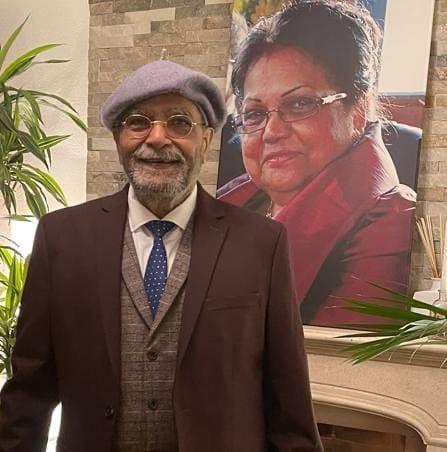
Biodata: Dr. Shardhanand Harinandan Singh, EIMT Professor Zürich
Professor Dr. Shardhanand Harinandan Singh (*1944, Suriname), educator, essayist, writer, and social Change manager. He is the founder of the academic discipline Girmitiyalogy, dedicated to the study of Indian indentured labour and its global descendants. In 1967, he was relocated from Suriname to the Netherlands, where he worked as a teacher, educational advisor, and freelance supporter of multicultural integration and emancipation in multicultural societies.
He authored several books, including Ayurveda: A Guide for a Healthy Family Diet (1998), Ayurvedic Prevention and Cure of Repetitive Strain Injury (2000), Memoirs of an Abandoned Past (2020), Homogenization in Multiculturality (2023), and Social Loss Feelings (2025). He published more than 100 columns and essays online.
Additionally, he is the initiator of Mondial Online Girmitya University. In March 2025, he inaugurated the Lineage Archives & Searching Centre (GGLASC) in Madhubani, Bihar and later in June, the Scientific Online Forum for Academic Genealogy (SOFAG). He initiates and supports the website Girmititaylogy.com. His lifelong mission is to promote intercultural education, historical justice, and sustainable connections among diverse communities, inspired by the Vedic life dictum ‘Vasudeva Kutumbakam’ – One Earth, One Family, One Future. For his lifelong global efforts, he received the Award of Professor of diaspora studies by EIMT, Zurich, Switzerland. Currently, he is conducting Girmitiyalogy around the world on behalf of the colonised nations with a Girmityan past. These days, he has started on his next book, “ Vedanta Inclusivity in Western Science.
Notice: An online search process for the word Girmitiyalogy gives the following answer: the only publication with the word Girmitiyalogy that is unambiguously identified as a writer is by Prof. Dr. Shardhanand H. Singh (July 20, 2025); in addition, the term is listed as a headline on the GGLASC site (June 2025), the Global Girmitiya Lineage Archive & Searching Centre in Madhubani, with Prof. Dr. Shardhanand Harinandan Singh, CEO.
Recommended literature: All available online.
World Bank, Migration and Development Brief 39 (Dec. 2023). https://documents1.worldbank.org/curated/en/099740408142422676/pdf/IDU-84dfd61b-e135-4242-a202-3728b2e8fa86.pdf
World Bank Press Release, 26 Jun. 2024. https://www.worldbank.org/en/news/press-release/2024/06/26/remittances-slowed-in-2023-expected-to-grow-faster-in-2024
Choenni, Chan E. S. Hindostaanse contractarbeiders 1873–1920: van India naar de plantages in Suriname. LM Publishers, 2016.
Choenni, Chan E. S. (2025). History of Hindostani’s 1873–2023: India–Suriname–The Netherlands, Publisher: Sampreshan, Zoetermeer, 2025, ISBN: 9789083345178.
Bhagwanbali, Radjinder. Contracten voor Suriname : arbeidsmigratie vanuit Brits-Indië onder het indentured-labour system 1873–1916. (PhD-proefschrift), Radboud Universiteit, 1996.
Radjinder Bhagwanbali (2011). Tetary: de koppige: het verzet van Hindoestanen tegen het Indentured Labour System in Suriname, 1873–1916, Publisher: Amrit (NSHI-SIN-IISR-reeks, deel 3.
Rai Satish (2024). Lessons Learned: Wisdom from 40 Years of Investing, Paperback – May 1, 2024, Paperback: 143 pages, ISBN 978-907-489-7631.
Lal, Brij V. Girmitiyas: The Origins of the Fiji Indians. Canberra: Journal of Pacific History, 1983. https://babel.hathitrust.org/cgi/pt?id=mdp.39015069351362
Maira, Sunaina Marr. Desis in the House: Indian American Youth Culture in New York City. Temple UP, 2002. https://www.jstor.org/stable/j.ctt1bw1j00
Munro, Doug. “Of Journeys and Transformations: Brij V. Lal and the Study of Girmit.” In Chalo Jahaji, ANU Press, 2000. https://www.theiii.in/learn/pdf/Of_Journeys_and_Transformations_Brij_V._Lal_and_the_Study_of_Girmit.pdf
Northrup, David. Indentured Labour in the Age of Imperialism, 1834–1922. Cambridge UP, 1995. https://assets.cambridge.org/97805214/80475/sample/9780521480475ws.pdf
Oxford Bibliographies. “Indian Indentured Servitude in the Atlantic World.” 2017. https://www.oxfordbibliographies.com/abstract/document/obo-9780199730414/obo-9780199730414-0210.xml
The National Archives (UK). “Indian indentured labour.” Research guide, 2007. https://sharresearch.wordpress.com/wp-content/uploads/2011/07/indian-indentured-labour.pdf
World Bank. Migration and Development Brief 39. Dec. 2023. https://documents1.worldbank.org/curated/en/099740408142422676/pdf/IDU-84dfd61b-e135-4242-a202-3728b2e8fa86.pdf
World Bank. “Remittances Slowed in 2023, Expected to Grow Faster in 2024.” Press Release, 26 Jun. 2024. https://www.worldbank.org/en/news/press-release/2024/06/26/remittances-slowed-in-2023-expected-to-grow-faster-in-2024
Tinker, Hugh. A New System of Slavery: The Export of Indian Labour Overseas, 1830–1920. Oxford UP, 1974. https://archive.org/details/newsystemofslave0000tink
Breedveld, Peter. “The invisible success of the Dutch Hindus.” Ad Valvas, 14 Jan. 2015, advalvas.vu.nl/wetenschap-onderwijs/het-onzichtbare-succes-van-de-nederlandse-hindoestanen/. Accessed 5 Sept. 2025.
Kumar, Ashutosh, and Crispin Bates, editors. Girmitiyas and the Global Indian Diaspora: Origins, Memories, and Identity. Global South Asians, Cambridge University Press, 2024.
“Girmitiya Literature: A Raga and Saga of Indentured Labour and Diasporic Identity.” ResearchGate, 27 Aug. 2025.
Parmar, Gayatri, et al. “Connecting with the Roots: Girmitiya Memoirs.” Kuey, vol. 30, no. 10, 2025.
“How Bollywood Shapes Diasporic Identities: Consumption and Representations.” Diaspora & Transnational Communities, 14 Dec. 2022.
“Fijian Students’ Perceptions of Indian Popular Culture.” International Journal (2025).
Fields, K. E. Bollywood and Cultural Identity in the Indian Diaspora. 2007.
Kaur, Manpreet, and Sanjaleen Prasad. “Home, Migration and New Identities – Fijian Girmitiyas.” Fijian Studies, vol. 15, no. 1, 2018.
“Cultural Hybridity and Identity Crisis in Postcolonial Indian English Literature.” English Journals, vol. 10, no. 2, 28 Dec. 2024.
Jayaram, N. From Indians in Trinidad to Indo-Trinidadians: The Making of a Girmitiya Diaspora. Springer, 2022. Focuses on the socio-cultural evolution of Girmitiyas in Trinidad, highlighting religion, language, family, and ethnicity.
Lal, Brij V., editor. Girmitiyas: The Making of Their Memory-Keepers from the Indian Indentured Diaspora. Primus Books, 2023. A volume of biographical essays by historians of the Girmitiya diaspora, with emphasis on memory and historiography.
Lal, Brij V. “Indian Indenture: History and Historiography in a Nutshell.” Journal of Studies in Indentured Legacies, vol. 1, no. 1, 2021. Offers a concise overview of historiographical approaches to indenture.
Singh, Dharmendra Kumar. “Girmitiya Literature: A Raga and Saga of Indentured Labour and Diasporic Identity.” Crossroads, vol. 1, no. 1, July 2025. Analyzes Girmitiya literature as a genre of trauma, identity, and cultural memory—discussing writers from Sudesh Mishra to V. S. Naipaul.
Upadhyay, Onkar Nath, and Shrestha Pandey. “Girmitiya Literature: The Growth and Development of Girmitiya Literature.” The Achievers Journal: Journal of English Language, Literature and Culture, vol. 7, no. 4, 2021, pp. 9–13. Discusses the features and evolution of Girmitiya literature in the 21st century.
Bahadur, Gaiutra. Coolie Woman: The Odyssey of Indenture. Hurst & Company/University of Chicago Press, 2013. A biographical narrative of the author’s great-grandmother, weaving archival research, oral history, and gender analysis into the story of indenture.
Pande, Amba. Indentured and Post-Indentured Experiences of Women in the Indian Diaspora. Springer, 2020. A multidisciplinary study of Girmitiya women, highlighting migration, settlement, agency, resistance, and transformation.
UNESCO. Records of the Indian Indentured Labourers, 1845–1917. UNESCO Memory of the World Register, 2020. Describes archives from Fiji, Guyana, Suriname, and Trinidad & Tobago—crucial for genealogical and archival studies.
“The Agreement and the Girmitiya.” Harvard Law Review, Mar. 2021. Examines the legal and colonial frameworks behind indenture, using Fiji as a case study, with implications for policy and citizenship debates.
Archival recovery & transnational social history, Kumar & Bates (2024); Jayaram (2022); UNESCO (2020). Provide strong archival and historical foundations based on records and community narratives.
Digital archiving & policy analysis UNESCO; Harvard Law Review (2021)UNESCO is essential for archival digitalization projects; Harvard highlights the legal and policy structures of indenture.
Cultural and literary identity Singh (2025); Upadhyay & Pandey (2021); Bahadur (2013). Explore how literature articulates the Girmitiya experience, identity, and memory.
Gendered approaches , Pande (2020) adds a critical dimension of women’s experiences in indenture and post-indenture contexts.
For archival recovery and transnational history: Use Kumar & Bates, Jayaram, and UNESCO as evidence for why “Girmitiyalogy” must be grounded in both memory and documented sources.
For policy analysis and citizenship: Cite UNESCO and Harvard Law Review when discussing dilemmas of citizenship, OCI/PIO status, and transnational rights.
For self-reflexive historiography: Bring in Lal’s essays as examples of how the diaspora has critically engaged with its own memory and representation.
Gowricharn, Ruben. Ethnobotany and Animals in Girmitiya Diaspora: Explorations from the Caribbean. South Asian Diaspora, vol. 16, no. 2–3, 2024, pp. … DOI: 10.1080/19438192.2024.2360307. This article highlights how Indian natural elements—plants, foods, rituals, animals—served as cultural anchors in the Girmitiya diaspora, shaping identity and ethnogenesis in the Caribbean.
Vrije Universiteit Amsterdam, “Stories of Girmitiyas: Folklore and the Sociocultural World of Indentured Indians in the Sugar Colonies.” In Girmitiyas and the Global Indian Diaspora, Cambridge University Press, 2024, pp. 69–82. Explores how Bhojpuri and related folklore traditions were maintained and transformed across generations in the diaspora.
“The Agreement and the Girmitiya.” Harvard Law Review, Mar. 2021. Offers critical insight into the resistance movements of plantations and the solidarity among Girmitiyas, illuminating the psychosocial and political underpinnings of their collective identity.
“Girmitiyas.” Wikipedia updated recently. Defines the etymology of “girmit” as the Bhojpuri corruption of “agreement” and situates it within the context of indentured migration across multiple colonies. Wikipedia
Girmitiyas and the Global Indian Diaspora: Origins, Memories, and Identity. Cambridge University Press, 2024. Particularly the Introduction, which defines “girmit” and traces the formation of Girmitiya communities, forging new identities post-contract in colonies such as Mauritius, Suriname, and Fiji.
Varma, A. “Girmitiya Lives: Experiences of Dalit Labourers under Indenture.” [Journal Name], 2024. Examines caste dynamics within indentured labour, highlighting underexplored social stratifications in the experiences of Girmitiyas.
Introduction to Girmitiyas and the Global Indian Diaspora provides a historical-linguistic grounding for the term “girmit” and situates the broader concept of Girmitiyas.
Urgent necessity of Girmitiya studies —Harvard Law Review (2021) illustrates the Socio-political, psychological, and resistance-driven imperatives behind establishing a dedicated discipline.
Distinctiveness of Girmitiya descendants —Gowricharn (2024) Offers tangible evidence of cultural continuity and selective identity practices—key to highlighting how their diasporic trajectory diverges from other Indian migrations.
Cultural frameworks and memory—“Stories of Girmitiyas” (2024) illustrates folk traditions, memory, and identity that persist through centuries within diaspora communities.
Intersectional complexities—Varma (2024) introduces caste as an additional lens to understand internal heterogeneity and the limits of prevailing Indian diaspora narratives.
Gowricharn, Ruben. Ethnobotany and Animals in Girmitiya Diaspora: Explorations from the Caribbean. South Asian Diaspora, vol. 16, no. 2–3, 2024. DOI: 10.1080/19438192.2024.2360307.
“Stories of Girmitiyas: Folklore and the Sociocultural World of Indentured Indians in the Sugar Colonies.” Girmitiyas and the Global Indian Diaspora: Origins, Memories, and Identity, Cambridge University Press, 2024, pp. 69–82.
0000000000——————–000000000
Appendix 1 Mondial Online Girmitiyalogy University (MOGU)
This document was produced by the author on behalf of the intern deliberations regarding the establishment of the Mondial Online Girmitiyalogy University (MOGU) in the future.
Mondial Online Girmitiyalogy University (MOGU) is an international academic platform dedicated to the study of Girmitiyalogy – the history, culture, genealogy, and contemporary significance of the descendants of Indian indentured labourers (Girmitiyas) worldwide.
MOGU is not a traditional university, but rather a global knowledge network that combines online and hybrid education, in collaboration with universities, colleges, and research institutes in different countries. Its mission is to promote academic research, education, and social dialogue on Girmityalogy in an accessible and sustainable way.
Programs
MOGU offers a range of online certificate programs and academic courses aligned with international standards. Students and researchers gain the opportunity to build knowledge and skills in fields such as:
• Girmitya History & Migration Studies.
• Genealogy and Digital Archives.
• Diaspora Identity & Hybrid Cultures.
• Postcolonial Studies and Globalization.
• Intercultural Education and Heritage Preservation.
In addition to fully online courses, hybrid learning formats are also available, allowing participants to attend lectures and masterclasses digitally while joining seminars, fieldwork, or academic gatherings at partner institutions.
Collaboration & Reach
MOGU collaborates with a growing network of universities and colleges in:
• India – including Lucknow University, Banaras Hindu University, Jawaharlal Nehru University (in preparation).
• Caribbean & Suriname –(in preparation).
• Europe & Africa – institutes engaged in (post) colonial studies
Through this international collaboration, MOGU has a truly global reach, cooperating with academic partners worldwide to enable students to share knowledge, conduct genealogical research, and contribute to the restoration of broken colonial family histories.
Strategy
Various approaches are eligible for implementing objectives. The following are the possibilities.
• Interdisciplinary education – integrating history, social sciences, anthropology, heritage, and digital humanities.
• Interactive digital lectures – with faculty, guest speakers, and diaspora experts.
• Hybrid seminars and masterclasses – locally organized with international participation.
• Digital research archives – providing access to globally collected Girmityan data and sources.
Mission
The mission of MOGU is to promote academic excellence, Education and global awareness of the heritage of the Girmitiyas and their descendants. It seeks to contribute to an inclusive world in which “Vasudeva Kutumbakam – One Earth, One Family, One Future” is not merely a philosophy but a lived reality.
Appendix 2: Study Offer in Girmityalogy
The emerging academic field of Girmityalogy is developing a structured programme of studies, ranging from introductory minors to advanced doctoral training. In collaboration with partner institutions, we currently facilitate two principal academic pathways:
• Executive PhD in Girmityalogy: Designed for candidates holding an MA or equivalent degree, this track combines flexible online study with intensive supervision. The programme allows scholars to pursue a thesis within the interdisciplinary framework of Girmityalogy and aims to be completed within two to four years. Successful candidates earn a fully accredited doctorate with international recognition.
• Minor in Girmityalogy: Targeted at undergraduate students in the humanities and social sciences, the minor introduces diaspora history, archival studies, and methodologies of digital decolonization. It equips students with tools to engage critically with migration, memory, and cultural identity.
In both programs, our role is to facilitate the academic framework and provide implementation guidance to partner universities. While accreditation remains the prerogative of host institutions, we ensure quality assurance, expert supervision, and integration of international scholarly networks.