Girmitiyalogy as a Catalyst for Curriculum Reform: Clearing Obstacles, Building Bridges
© Copyright Disclaimer. Parts of this text may be freely used provided that proper citation is made in accordance with MLA conventions. Use without proper attribution or for commercial purposes is not permitted without prior written permission from the author.
By Professor Dr. Shardhanand Harinandan Singh,
Professor of Girmitiyalogy & Migration Studies,
European Institute of Management and Technology (EIMT), Zürich
Abstract
As part of the Orientation and Sensitization Program on the diversity and significance of Girmitiyalogy, several targeted presentations will be offered during the seminar from September 18 to 26. I hope these sessions are designed to give participants a clear understanding of what this new interdisciplinary field can offer.
I am pleased to present my first paper for this occasion. Two additional papers on Girmitiyalogy will follow during the seminar. Together, these contributions aim to support the academic objectives of this important initiative, focused on Girmitiyalogy.
This paper explores the silenced history of Indian indentured labourers — the Girmitiyas — and how their narratives have been historically marginalized in mainstream scholarship and education. It argues that Girmitiyalogy, a newly conceptualized interdisciplinary field, provides a powerful framework for decolonizing knowledge, reforming curricula, and reconnecting descendants with their ancestral past. The essay examines structural violence, racial hierarchies, and epistemic injustice perpetuated by colonial and postcolonial systems, then outlines a roadmap for integrating Girmitiyalogy into school and university curricula globally. It proposes practical steps for educators and policymakers, with a focus on participatory pedagogy, intercultural dialogue, and archival justice.
Preface: Origins and Vision of Girmitiyalogy
The term Girmitiyalogy was formally introduced in 2025 during the closing session of the international Masterclass Digitizing Girmitiya Archives and the History of Their Descendants Globally, held at Lucknow University.[1] This fifteen-day program brought together over 100 participants, professors, PhD scholars, and students from more than 40 countries. Participants received certificates, symbolizing the birth of Girmitiyalogy as an academic discipline.
Girmitiyalogy is derived from the colloquial word Girmit (a corruption of “agreement”) used by indentured labourers to describe their contract, and the Greek suffix -logy, meaning “the study of.” Its purpose is twofold: to restore silenced history through archival recovery and to integrate these narratives into educational systems worldwide.[2]
The inspiration behind this field is deeply personal: as a descendant of Girmitiyas, I have experienced first-hand the gaps in historical memory that haunt many Girmitiyan families. By formalizing Girmitiyalogy, we aim to create an academic home for these stories, where they can be preserved, studied, and shared with future generations.[3]
Footnotes (Page 1)
[1] Harinandan Singh, Masterclass Report: Digitizatoing Girmitiya Archives, Lucknow University, 2025, pp. 1–3.
[2] Lal, Brij V., Chalo Jahaji: On a Journey Through Indenture in Fiji, ANU Press, 2000, p. 15.
[3] Choenni, Chan E.S., Hindostaanse Surinamers 1873–2015, LM Publishers, 2016, pp. 22–
I Introduction
The history of indentured labour is one of the largest unacknowledged migrations of the nineteenth and early twentieth centuries. Between 1834 and 1920, over 1.3 million Indians were transported under the indenture system to work on plantations in the Caribbean, South America, Africa, and the Pacific.[4] For many decades, this migration was framed in colonial archives as a “civilizing mission” and an economic necessity, ignoring the realities of coercion, exploitation, and racial hierarchies.
In mainstream education, especially in the Global North, the Girmitiya experience is often reduced to a footnote, if mentioned at all. This omission constitutes epistemic violence, as philosopher Gayatri Spivak might argue, because it silences the voices of the subaltern.[5] Moreover, the absence of these narratives perpetuates a Eurocentric worldview in curricula, denying students a fuller understanding of colonialism’s global consequences.
Girmitiyalogy aims to bridge this gap by developing a knowledge system that is inclusive, interdisciplinary, and restorative. It combines history, sociology, anthropology, digital humanities, and psychology to form a holistic approach to understanding indenture and its legacies.[6]
Footnotes (Page 2)
[4] Tinker, Hugh, A New System of Slavery: The Export of Indian Labour Overseas 1830–1920, Oxford University Press, 1974, pp. 45–47.
[5] Spivak, Gayatri Chakravorty, “Can the Subaltern Speak?” in Colonial Discourse and Post-Colonial Theory, Routledge, 1988, pp. 271–313.
[6] Verma, Murli Manohar, Girmitiya Heritage and Global Migrations, Lucknow University Press, 2024, pp. 12–16.
II Structural Violence and Epistemic Injustice
The Girmitiya system cannot be understood solely as an economic arrangement; it was a system of structural violence that affected every dimension of human life — physical, cultural, and psychological.[7] Violence was not only present in corporal punishment or forced labour but also in the denial of cultural expression, suppression of language, and erasure of identity. As a result of this, I notice that the most Britisch and French colonised nations globally are rarely able to speak their reformed Bhojpuri. So, pity!
Colonial archives often portrayed Girmitiyas as passive labourers, reducing them to mere economic units. Such representation created a distorted historical memory that persists today in textbooks and media narratives.[8] This is what anthropologist Paul Farmer describes as “structural violence”, the harm caused by unjust social structures that limit human potential.[9] The descendants of the deprived Girmitiyas have a right to justice.
Epistemic injustice occurred when Girmitiyas were denied the ability to narrate their own experiences. Knowledge about them was mediated through colonial officials, planters, and missionaries, whose writings prioritized imperial interests.[10] Girmitiyalogy challenges this by privileging oral histories, family archives, and community memory as legitimate sources of knowledge.
Footnotes (Page 3)
[7] Farmer, Paul, Pathologies of Power: Health, Human Rights, and the New War on the Poor, University of California Press, 2003, p. 40.
[8] Kelly, John D., A Politics of Virtue: Hinduism, Sexuality, and Countercolonial Discourse in Fiji, University of Chicago Press, 1991, pp. 88–92.
[9] Farmer, Paul, Structural Violence and Clinical Medicine, PLoS Medicine, 2006, 3(10): e449.
[10] Lal, Brij V., “Girmitiyas: The Origins of the Fiji Indians,” ANU Press, 1983, pp. 3–7.
III Cultural Erasure and Resistance
Cultural erasure under indenture was both explicit and subtle. Official plantation rules prohibited the performance of certain rituals, restricted mobility, and imposed Christian missionary education as a tool of discipline.[11] Despite these controls, Girmitiyas resisted through covert cultural practices: singing birha songs, retelling epics like the Ramayana in secret gatherings, and maintaining culinary and sartorial traditions even under surveillance.[12]
This quiet resistance formed the foundation of a distinct diasporic identity. Anthropologists have shown that such acts of everyday resistance — what James Scott calls “the hidden transcript” are crucial to understanding subaltern agency.[13] By studying these acts, Girmitiyalogy reveals not just the suffering of indentured labourers but also their creativity and resilience.
Educational curricula across former colonial nations often remain Eurocentric. While the history of slavery has gained recognition in many places, the history of indenture is still marginal.[14] This imbalance skews public memory and denies younger generations a comprehensive understanding of how colonial economies functioned after abolition.
Girmitiyalogy offers an opportunity to rebalance this narrative. By integrating modules on indenture into history and social science courses, schools and universities can foster a more inclusive curriculum.[15] Such inclusion also benefits students of non-Indian descent, as it deepens their understanding of global interconnectedness and the multiple forms of labour exploitation that shaped the modern world.
A practical approach might include the following steps:
*Development of digital archives with open access to ship registers, emigration passes, and plantation records.
*Inclusion of oral histories collected from descendant communities.
* Partnerships between universities, museums, and diaspora organizations to create interactive learning tools such as virtual exhibitions.
By the way, the use of compulsory student engagement through questions or short essays after seminars is intended to encourage critical thinking.[16]
IV Decolonizing Knowledge Production
Decolonizing the academy requires not just adding new content but transforming epistemological frameworks. This means valuing non-Western sources of knowledge, recognizing oral tradition, and questioning the authority of colonial archives as the sole arbiters of truth.[17]
Girmitiyalogy employs a transdisciplinary methodology that integrates historians, linguists, psychologists, and community elders. This approach creates a more democratic space for knowledge production, aligning with the principle of Vasudhaiva Kutumbakam — “the world is one family.”[18]
Epistemic justice also demands a focus on psychosocial impacts of indenture, including intergenerational trauma, cultural loss, and issues of belonging among the descendants.[19] By making space for these dimensions, Girmitiyalogy contributes to healing historical wounds and building sustainable social cohesion.
Footnotes (Page 4)
[11] Kelly, John D., A Politics of Virtue, p. 104.
[12] Jayawardena, Chandra, Culture and Ethnicity in Guyana and Fiji, Man, New Series, Vol. 16, No. 3 (1981), pp. 430–450.
[13] Scott, James C., Domination and the Arts of Resistance: Hidden Transcripts, Yale University Press, 1990, pp. 183–185.
Footnotes (Page 5)
[14] Mohammed, Patricia, “The Legacy of Indentureship in Caribbean Education,” Caribbean Quarterly, 2010, pp. 55–60.
[15] Singh, Shardhanand Harinandan, Homogenization in Multiculturality, Mumbai: 2024, pp. 188–192.
[16] Personal communication with a BHU PhD scholar, July 2025 – field notes, p. 2.
Footnotes (Page 6)
[17] Mignolo, Walter, Epistemic Disobedience: Independent Thought and De-colonial Freedom, Theory, Culture & Society, 2009, 26(7–8), pp. 159–181.
[18] Sharma, Arvind, Vasudhaiva Kutumbakam: Reinterpreting an Ancient Ideal for a Global Age, Journal of Hindu Studies, 2016, pp. 32–35.
[19] Choenni, Chan, Migratie en Familiebanden: De psychosociale effecten van diaspora, LM Publishers, 2023, pp. 88–93.
V Case Studies and Implementation Roadmap
To illustrate this, I chose the following countries.
Suriname: Cultural Preservation through Policy
- Suriname represents a unique case where the postcolonial government, under pressure from civil society organizations like Stichting Lalla Rookh Nederland, implemented policies that allowed Hindostani, Javanese, and other communities to maintain cultural traditions after independence.[20] This approach countered earlier Dutch plans for rapid assimilation and repatriation, and resulted in a relatively smooth integration of Indo-Surinamese citizens into Dutch society after 1975.[21]
Such policies included state support for cultural schools, media in Hindi and Javanese, and public recognition of Divali and Eid as national holidays.[22] These measures created what sociologists call a “protected pluralism,” which might serve as a model for other postcolonial states. Girmitiyalogy helps frame these developments as lessons in balancing diversity and national unity.
- Trinidad & Tobago: Archival Justicearchives, allowing descendants to trace their ancestry using ship registers and plantation records.[23] Collaboration between the National Archives and the Indian Diaspora Council has resulted in accessible databases for researchers and families alike.
This democratization of archival access exemplifies the principle of archival justice, which Girmitiyalogy champions. Similar initiatives could be replicated in Mauritius, Fiji, and South Africa through international cooperation, using common digital standards.[24]
- The Netherlands: Decolonizing Education
In the Netherlands, recent debates about colonial memory have largely centered on the transatlantic slave trade, but attention to contract labour migration from Asia and Africa is growing.[25] Several Dutch universities now offer elective courses on indenture history, but there is no coordinated curriculum reform at the national level.
Introducing Girmitiyalogy modules into teacher training programs could ensure that this history reaches high school students. Including visits to archives, museums, and community centers would make the learning process experiential rather than purely theoretical.[26]
- Mauritius: Status of Girmitiyalogy in Curricula
In Mauritius, the foundations for Girmitiyalogy are strong but not yet formalized in school or university curricula. The Mahatma Gandhi Institute (MGI) preserves extensive archives of indentured labourers, recognized by UNESCO’s Memory of the World program, and makes them available for research and education. Heritage institutions such as the Aapravasi Ghat Trust Fund promote intercultural education and public history projects that highlight the indenture experience.
Community organizations like the Arya Samaj and other cultural associations support language teaching and heritage activities that indirectly transmit Girmitiya memory. The Mauritius Institute of Education includes multicultural heritage elements in national curriculum frameworks, but there is no dedicated discipline formally labeled Girmitiyalogy. The Truth and Justice Commission recommended stronger curricular inclusion of indenture history, and progress is ongoing. Mauritius is therefore well-positioned to become a regional leader in integrating Girmitiyalogy into formal education.
- In Fiji
In Fiji, Girmit history is increasingly recognized but not yet a formal subject in school curricula. The University of the South Pacific (USP) offers courses on Indo-Fijian history and literature, giving students exposure to the indenture experience. Heritage efforts, including the Global Girmit Museum in Lautoka, preserve artefacts and oral histories, keeping community memory alive. While these initiatives enhance awareness, primary and secondary education still offer limited coverage. Fiji’s progress shows growing potential to formalize Girmitiyalogy as an interdisciplinary field, combining archival research, oral history, and public education for future generations.
- Guyana
In Guyana, the history of Indian indentureship is partially acknowledged, but not yet fully integrated into formal curricula. Calls have been made to include the full story of indenture into the CXC (Caribbean Examinations Council) curriculum, especially given that about 40% of the population is of Indian descent. (Guyana Times)
While universities and researchers engage with the topic—through colonial archives, literature, and diaspora studies, primary and secondary education still largely treats indentured migration as a supplementary topic rather than a core subject. The National Archives of Guyana preserve relevant records, supporting potential for greater inclusion.
- Other Colonized Nations
Some patterns of Girmitiyalogy existed in Malaysia, South Africa, Réunion, and East Africa, which were under British, French, and Dutch colonial regimes. These systems combined economic exploitation with cultural suppression, aiming to reshape subject populations.
In India, we can observe that various activities involving individuals or the Government are scientific and sociocultural activities that occur annually as recurring events that the Girmitiyalogy can embrace. This must be mapped out.
Nonetheless, we observe that activities are underway in some colonised nations in a well-thought-out direction. This needs support.
VI Implementation Roadmap
For the sake of completeness, I would like to take this opportunity to emphasize that Girmitiyalogy was created with great expectations. We aim to establish this as an independent scientific institute, operating as a self-sustaining entity. In the sense that Girmitiyalogy, as an online open university, aims to independently offer internationally accredited courses at the levels of BA, MA, PhD, PhD executive, and Minor in certain disciplines. However, in the early years, it limited itself to an intermediary institute that wanted to integrate worldwide; its program offered only a partial offering. To this end, its Website, Girmitiyalogy.com, was put online on September 18, 2025, by the Honorable Vice Chancellor, Professor Dr Manuka Khanna of Lucknow University, Uttar Pradesh, India. This is a platform on which all possible and relevant knowledge can be shared with each other.
A phased strategy for introducing Girmitiyalogy into curricula might look as follows:
Phase 1 – Awareness & Advocacy (Year 1–2):
* International conferences and masterclasses to sensitize students, academics and policymakers.
* Publication of introductory texts and online modules in multiple languages.
Phase 2 – Curriculum Development (Year 3–4):
* Creation of teaching materials, textbooks, and multimedia resources.*
Training of educators through workshops and certification programs.
Phase 3 – Integration & Assessment (Year 5):
* Piloting Girmitiyalogy modules in selected universities and schools. This has already started by the European Institute of Management and Technology (EIMT Zürich, Switzerland. And I have the supervising task in the stage of choosing themes and completing the dissertation on the field of Girmitiyalogy.
* Evaluating student learning outcomes and revising content based on feedback.[27]
Phase 4 – Global Collaboration (Year 6+):
* Establishing a consortium of universities and diaspora organizations.
* Creating a peer-reviewed Journal of Girmitiyalogy to ensure scholarly rigour.
* Linking archives worldwide into a federated digital repository for open access.[28]
VII Conclusion: A Call to Action
The silence surrounding indenture history has persisted for over a century, allowing myths and stereotypes to fill the gaps in public memory. Girmitiyalogy seeks to replace this silence with knowledge, dialogue, and healing.
Educational reform is not just an academic exercise — it is an ethical imperative. By integrating Girmitiyalogy into curricula, we empower students to understand the entanglements of colonial history, labour migration, and modern identity politics. This understanding is crucial to creating societies that value diversity without erasing differences.
The challenge now lies with policymakers, educators, and civil society leaders to act. History must no longer be taught as a one-sided narrative but as a polyphonic account that honours all voices, including those once silenced by empire.[29]
As the Vedantic ideal reminds us: Vasudhaiva Kutumbakam — “One Earth, One Family, One Future.”[30] The time has come to make this ideal a reality by ensuring that the descendants of Girmitiyas find their rightful place in global memory and education.
Footnotes (Page 7)
[20] Harinandan Singh, Shardhanand, Verlaten Verleden, Rotterdam: 2021, pp. 268–278.
[21] Choenni, Chan E.S., Hindostaanse Surinamers 1873–2015, pp. 145–149.
[22] Ramsoedh, Hans, Suriname: Van Wingewest tot Natiestaat, KITLV Press, 2018, pp. 202–204.
Footnotes (Page 8)
[23] Mahabir, Kumar, “Digitizing the Girmitiya Past: Trinidad Experience,” Journal of Caribbean History, 2022, pp. 77–83.
[24] International Council on Archives, Principles of Access to Archives, ICA, 2012, p. 4.
[25] Oostindie, Gert, Postkoloniaal Nederland: Vijfenzestig jaar vergeten, herdenken, verdringen, Bert Bakker, 2010, pp. 98–101.
Footnotes (Page 9)
[26] Essed, Philomena, “Teaching Decolonial Thinking in Dutch Education,” Race, Ethnicity and Education, 2021, pp. 12–17.
[27] UNESCO, Global Citizenship Education: Topics and Learning Objectives, 2015, p. 33.
[28] Verma, Murli Manohar, Towards a Global Girmitiya Archive, Lucknow University Press, 2025, pp. 45–49.
[29] Trouillot, Michel-Rolph, Silencing the Past: Power and the Production of History, Beacon Press, 1995, p. 27.
[30] Sharma, Arvind, Vasudhaiva Kutumbakam, pp. 38–40.
0000000000000-0000000
Complete Footnote List (1–30)
[1] Harinandan Singh, Shardhanand. Masterclass Report: Digitizing Girmitiya Archives, Lucknow University, 2025, pp. 1–3.
[2] Lal, Brij V. Chalo Jahaji: On a Journey Through Indenture in Fiji. ANU Press, 2000, p. 15.
[3] Choenni, Chan E.S. Hindostaanse Surinamers 1873–2015. LM Publishers, 2016, pp. 22–24.
[4] Tinker, Hugh. A New System of Slavery: The Export of Indian Labour Overseas 1830–1920. Oxford University Press, 1974, pp. 45–47.
[5] Spivak, Gayatri Chakravorty. “Can the Subaltern Speak?” Colonial Discourse and Post-Colonial Theory, Routledge, 1988, pp. 271–313.
[6] Verma, Murli Manohar. Girmitiya Heritage and Global Migrations. Lucknow University Press, 2024, pp. 12–16.
[7] Farmer, Paul. Pathologies of Power: Health, Human Rights, and the New War on the Poor. University of California Press, 2003, p. 40.
[8] Kelly, John D. A Politics of Virtue: Hinduism, Sexuality, and Countercolonial Discourse in Fiji. University of Chicago Press, 1991, pp. 88–92.
[9] Farmer, Paul. “Structural Violence and Clinical Medicine.” PLoS Medicine, vol. 3, no. 10, 2006, e449.
[10] Lal, Brij V. Girmitiyas: The Origins of the Fiji Indians. ANU Press, 1983, pp. 3–7.
[11] Kelly, John D. A Politics of Virtue, p. 104.
[12] Jayawardena, Chandra. “Culture and Ethnicity in Guyana and Fiji.” Man, New Series, vol. 16, no. 3, 1981, pp. 430–450.
[13] Scott, James C. Domination and the Arts of Resistance: Hidden Transcripts. Yale University Press, 1990, pp. 183–185.
[14] Mohammed, Patricia. “The Legacy of Indentureship in Caribbean Education.” Caribbean Quarterly, 2010, pp. 55–60.
[15] Singh, Shardhanand Harinandan. Homogenization in Multiculturality. Mumbai: 2024, pp. 188–192.
[16] Personal communication with a BHU PhD scholar, July 2025 – field notes, p. 2.
[17] Mignolo, Walter. “Epistemic Disobedience: Independent Thought and De-colonial Freedom.” Theory, Culture & Society, vol. 26, no. 7–8, 2009, pp. 159–181.
[18] Sharma, Arvind. “Vasudhaiva Kutumbakam: Reinterpreting an Ancient Ideal for a Global Age.” Journal of Hindu Studies, 2016, pp. 32–35.
[19] Choenni, Chan. Migratie en Familiebanden: De psychosociale effecten van diaspora. LM Publishers, 2023, pp. 88–93.
[20] Harinandan Singh, Shardhanand. Verlaten Verleden. Rotterdam, 2021, pp. 268–278.
[21] Choenni, Chan E.S. Hindostaanse Surinamers 1873–2015. LM Publishers, 2016, pp. 145–149.
[22] Ramsoedh, Hans. Suriname: Van Wingewest tot Natiestaat. KITLV Press, 2018, pp. 202–204.
[23] Mahabir, Kumar. “Digitizing the Girmitiya Past: Trinidad Experience.” Journal of Caribbean History, 2022, pp. 77–83.
[24] International Council on Archives. Principles of Access to Archives. ICA, 2012, p. 4.
[25] Oostindie, Gert. Postkoloniaal Nederland: Vijfenzestig jaar vergeten, herdenken, verdringen. Bert Bakker, 2010, pp. 98–101.
[26] Essed, Philomena. “Teaching Decolonial Thinking in Dutch Education.” Race, Ethnicity and Education, 2021, pp. 12–17.
[27] UNESCO. Global Citizenship Education: Topics and Learning Objectives. UNESCO, 2015, p. 33.
[28] Verma, Murli Manohar. Towards a Global Girmitiya Archive. Lucknow University Press, 2025, pp. 45–49.
[29] Trouillot, Michel-Rolph. Silencing the Past: Power and the Production of History. Beacon Press, 1995, p. 27.
[30] Sharma, Arvind. “Vasudhaiva Kutumbakam.” Journal of Hindu Studies, 2016, pp. 38–40.
MLA Bibliography (Alphabetical)
Choenni, Chan E.S. Hindostaanse Surinamers 1873–2015. LM Publishers, 2016.
Choenni, Chan. Migratie en Familiebanden: De psychosociale effecten van diaspora. LM Publishers, 2023.
Essed, Philomena. “Teaching Decolonial Thinking in Dutch Education.” Race, Ethnicity and Education, 2021, pp. 12–17.
Farmer, Paul. Pathologies of Power: Health, Human Rights, and the New War on the Poor. University of California Press, 2003.
Farmer, Paul. “Structural Violence and Clinical Medicine.” PLoS Medicine, vol. 3, no. 10, 2006, e449.
Harinandan Singh, Shardhanand. Homogenization in Multiculturality. Mumbai: 2024.
Harinandan Singh, Shardhanand Harinandan. Verlaten Verleden. Rotterdam: 2021.
Harinandan Singh, Shardhanand Harinadan, Loss of feelings in multiculturality, Rotterdam, 2025
International Council on Archives. Principles of Access to Archives. ICA, 2012, https://www.ica.org/en/principles-access-archives
Jayawardena, Chandra. “Culture and Ethnicity in Guyana and Fiji.” Man, New Series, vol. 16, no. 3, 1981, pp. 430–450.
Kelly, John D. A Politics of Virtue: Hinduism, Sexuality, and Countercolonial Discourse in Fiji. University of Chicago Press, 1991.
Lal, Brij V. Chalo Jahaji: On a Journey Through Indenture in Fiji. ANU Press, 2000.
Lal, Brij V. Girmitiyas: The Origins of the Fiji Indians. ANU Press, 1983.
Mahabir, Kumar. “Digitizing the Girmitiya Past: Trinidad Experience.” Journal of Caribbean History, 2022, pp. 77–83.
Mignolo, Walter. “Epistemic Disobedience: Independent Thought and De-colonial Freedom.” Theory, Culture & Society, vol. 26, no. 7–8, 2009, pp. 159–181.
Mohammed, Patricia. “The Legacy of Indentureship in Caribbean Education.” Caribbean Quarterly, 2010, pp. 55–60.
Oostindie, Gert. Postkoloniaal Nederland: Vijfenzestig jaar vergeten, herdenken, verdringen. Bert Bakker, 2010.
Ramsoedh, Hans. Suriname: Van Wingewest tot Natiestaat. KITLV Press, 2018.
Scott, James C. Domination and the Arts of Resistance: Hidden Transcripts. Yale University Press, 1990.
Sharma, Arvind. “Vasudhaiva Kutumbakam: Reinterpreting an Ancient Ideal for a Global Age.” Journal of Hindu Studies, 2016, pp. 32–40.
Spivak, Gayatri Chakravorty. “Can the Subaltern Speak?” Colonial Discourse and Post-Colonial Theory, Routledge, 1988, pp. 271–313.
Tinker, Hugh. A New System of Slavery: The Export of Indian Labour Overseas 1830–1920. Oxford University Press, 1974.
UNESCO. Global Citizenship Education: Topics and Learning Objectives. UNESCO, 2015, https://unesdoc.unesco.org/ark:/48223/pf0000235863
Verma, Murli Manohar. Girmitiya Heritage and Global Migrations. Lucknow University Press, 2024.
Verma, Murli Manohar. Towards a Global Girmitiya Archive. Lucknow University Press, 2025.
Biodata – Professor Dr. Shardhanand Harinandan Singh
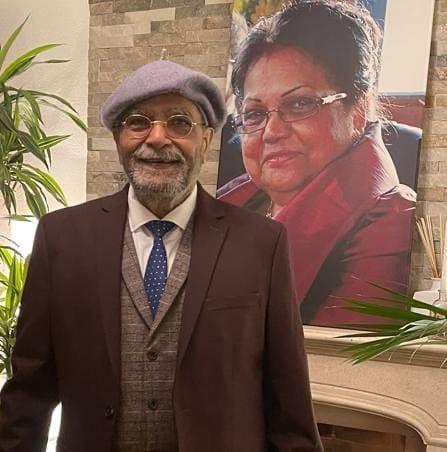
Professor Dr. Shardhanand Harinandan Singh is een vooraanstaand denker, schrijver en oprichter van het vakgebied ‘Girmitiyalogy’. Hij is sinds 2025 benoemd tot Professor aan EIMT Zürich, met als leeropdracht Girmitiyalogy and Migration studies. Zijn werk richt zich op het gebied van herstel van historische narratieven van de Indiase contractarbeiders (‘Girmitiyas’) en hun nakomelingen wereldwijd. Daarnaast zet hij zich in voor duurzame verbondenheid en respectvolle co-existentie in multifunctionele samenlevingen. Polarisatie in de samenleving wijst hij resoluut af. Bijna dagelijks schrijft hij op LinkedIn relevante artikelen. Hij deelt de vedisch visie van “Vasudeva Kutumbkam”; één familie, in één wertedl
Some of his publicaties;
*Feelings of change due to changing multiculturalism, how the government did not recognize deep feelings, 2025, Rotterdam, ISBN: 978-94-64-XXXX-X
*Homogenization in Multiculturality: Contours for Nation Creation with Ethnic Diversity* 2024, Mumbai, ISBN 9789464851793
*Abandoned Past* – Memoirs of Shardhanand Harinandan Singh 2021, Rotterdam, ISBN 9789403611044
*RSI Cured with Ayurveda Therapy, 2000, Ayurmedica Schiedam, ISBN 90-805092-3x
*Ayurveda, guide to a healthy diet, 1998, Psychomedical Paramaribo.
*Dozens of essays and conference papers on diaspora, interculturality, identity formation and restorative justice for Girmitiyas posthumously.
*Almost daily articles on LinkedIn about socially undesirable developments.
Professor Singh is the initiator of Girmitiyalogy, an interdisciplinary field that researches the history, culture and genealogy of Girmityas and their descendants worldwide. He organized the first international Masterclass ‘Digitization Girmitiya Archives’ in May 2025 at the University of Lucknow, where more than 100 participants, professors and PhD candidates and students from 40 countries participated. Under his leadership, Girmitiyalogy.com was developed and launched as a digital platform for research, education, training and connection with international archive centers and Universities/Colleges in the countries with post-slavery bonded labor.
Inspiration and vision of life
His vision of life is inspired by the Vedic idea *Vasudhaiva Kutumbakam – ‘The world is one family’. He strives for a society in which diversity is celebrated and at the same time bridges are built between cultures. His mission is to make young generations aware of their heritage, so that they can contribute to inclusive and just societies with self-confidence and belief in their own identity.This document has been prepared as his contribution to science, education and training in the field of Girmitiyalogy. It serves as a source for biographical entries and conference booklets.