

By Dr. Kumar Mahabir & Shalima Mohommed
Under international law, crimes against humanity are defined as “acts committed as part of a widespread or systematic attack directed against any civilian population, with knowledge of the attack.” These acts include enslavement, deportation, imprisonment, torture, rape, persecution, and other inhumane acts causing great suffering.[1]
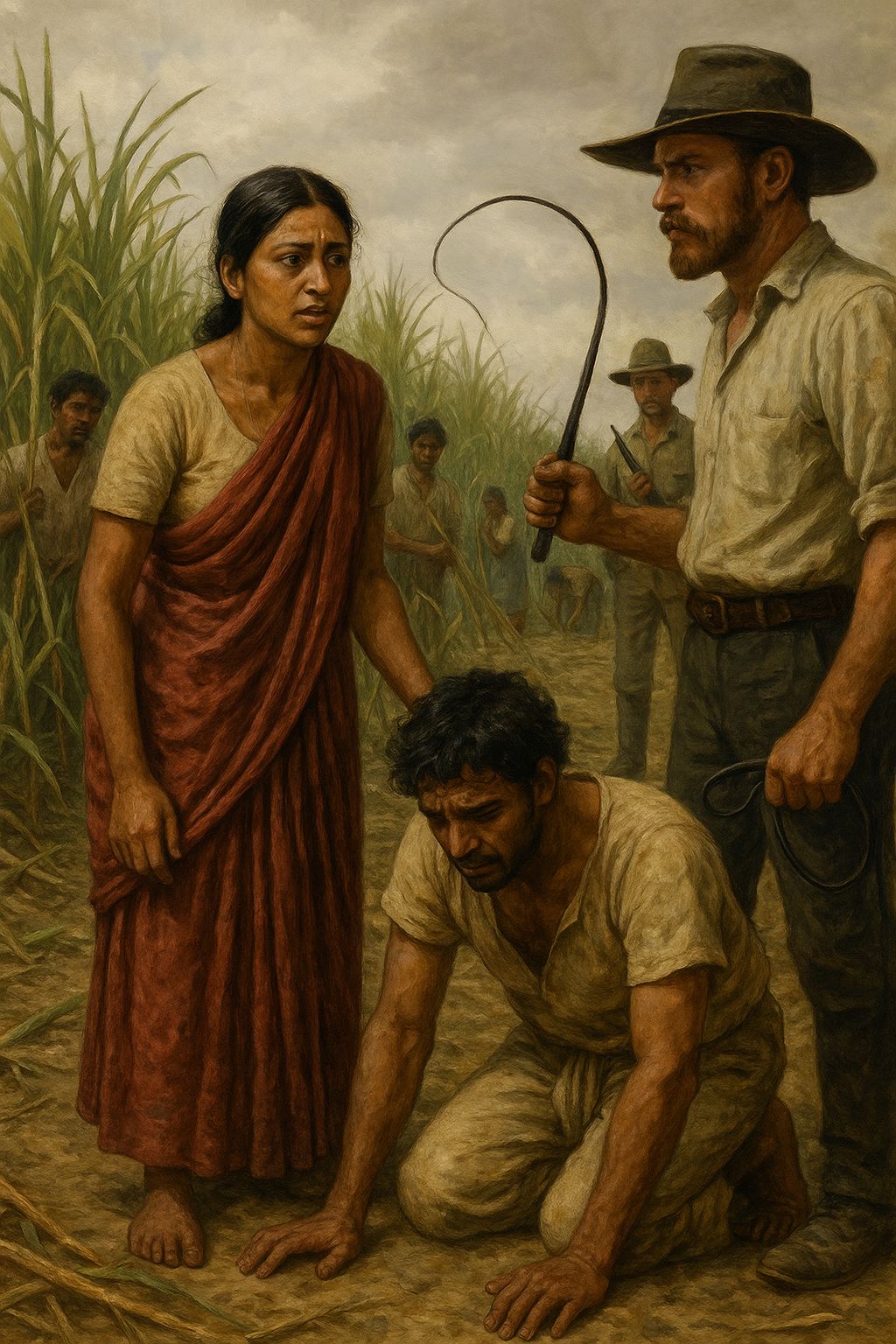
Many descendants, activists, and postcolonial scholars are calling for recognition, apology, and reparations for Indian migration and indentureship. They argue that the system of Indian indentureship involved widespread and systematic abuse that fits the spirit—if not the technical legal definition—of a crime against humanity. Historically and morally, Indian indentureship can indeed be viewed as a crime against humanity due to the systematic exploitation and dehumanization it involved. Legally, it falls into a grey area; however, the moral and historical parallels to slavery make the argument for Indian migration and indentureship compelling.
The following are excerpts from the Indo-Caribbean Cultural Centre (ICC) Thought Leaders’ Forum (19 October 2025). The ZOOM program was chaired by Shakira Mohommed and moderated by Shalima Mohommed, both from Trinidad. There were four speakers in the program. The topic was “Was Indian Indentureship a Crime against Humanity?” The unedited recording is available online.[2]
Prof. Shardhanand H. Singh
Slavery was officially recognized as a crime against humanity by the United Nations in 2001—a universal acknowledgement of human suffering and moral responsibility. Hence, we are talking about the unequal treatment of Indian indentureship. During indentureship, Indians also encountered severe injustices. Crimes against humanity were committed, and it is upon us to bring this before the law…
Prof. Onkar Nath Upadhyay
The systematic nature of violations, state involvement, and the scale of suffering meet the criteria for crimes against humanity under current international standards. The indenture system involved systematic deprivation of liberty, forced labour, and inhumane treatment on a massive scale—meeting all criteria under the Rome Statute…
Dr. Aniel Pahladsingh
There was no free will for the Indian migrant to terminate the contract. If one tried, penal or labour sanctions followed—often severe. Therefore, Indian indentured labour should be qualified as forced labour, violating the International Labour Organization (ILO) Convention No. 29 on Forced Labour.[4]
Prof. Mohammad Salim
Jamaat-e-Islami Hind has been active since 1948 as a socio-religious organization dedicated to promoting moral and human values. Our mission is justice—ensuring human dignity for all, particularly in India…
Conclusion: Can Indian Indentured Labour Be Declared a Crime Against Humanity?
From a moral and historical perspective, the Indian indentureship system clearly qualifies as a crime against humanity. It involved systematic coercion, forced labour, sexual violence, racial discrimination, and deprivation of liberty—all orchestrated under state authority and colonial policy. The experiences of millions of Indian labourers mirror many of the elements recognized under Article 7 of the Rome Statute of the International Criminal Court (1998).
From a legal standpoint, however, the classification remains complex. The Rome Statute and the Durban Declaration (2001) did not retroactively criminalize historical acts before their adoption. Furthermore, colonial powers operated under legal frameworks that permitted indenture as a contractual system, however exploitative it was. Because the law against “crimes against humanity” was not codified at the time, a modern court would likely face jurisdictional and temporal barriers to prosecuting it as such.
Nonetheless, the moral equivalence to slavery—recognized as a crime against humanity—strengthens the argument that Indian Indentureship deserves similar recognition, apology, and reparative justice. The systematic exploitation of millions of Indians under colonial control constitutes a de facto violation of the fundamental principles of human dignity, freedom, and equality.
Therefore, while not legally prosecutable today, Indian Indentureship meets the moral and human-rights criteria to be declared a Crime Against Humanity in the court of history and conscience.
MLA References
- Rome Statute of the International Criminal Court, Article 7: Crimes Against Humanity. United Nations, 1998. https://www.icc-cpi.int/resource-library/documents/rs-eng.pdf.
- Was Indian Indentureship a Crime against Humanity? Indo-Caribbean Cultural Centre (ICC) Thought Leaders’ Forum, 19 Oct. 2025. YouTube, uploaded by dmahab, https://www.youtube.com/@dmahab/streams.
- Durban Declaration and Programme of Action, World Conference Against Racism, Racial Discrimination, Xenophobia and Related Intolerance. United Nations, 2001. https://www.ohchr.org/en/durban-declaration-and-programme-of-action.
- International Labour Organization (ILO) Convention No. 29 on Forced Labour, Geneva, 1930. https://www.ilo.org/dyn/normlex/en/f?p=NORMLEXPUB:12100:0::NO::P12100_INSTRUMENT_ID:312174.
- European Convention on Human Rights, Article 4: Prohibition of Slavery and Forced Labour. Council of Europe, 1950. https://www.echr.coe.int/documents/convention_eng.pdf.