
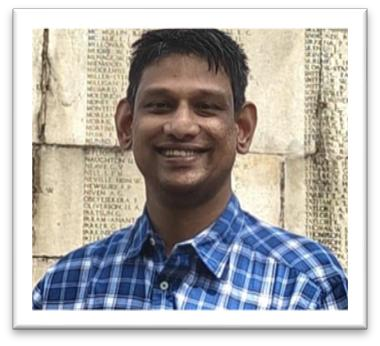
Author: Mr B. Jagannath, High Court Advocate, Madras
Reviewed in Girmitiyalogy Discourse by:
Baba Dr Shardhanand H. Singh, Professor of Girmitiyalogy & Transnational Migration
Studies, EIMT Zürich, Switzerland, © 2025 Shardhanand H. Singh, Rotterdam.
Abstract
This article revisits the rise of Chhatrapati Shivaji Maharaj within the broader context of slavery and early colonial expansion in Bharat. While European powers sought territorial and commercial control after 1645, Shivaji confronted both their encroachment and the entrenched system of slavery practised by the Mughals and Deccan sultanates, who exported enslaved natives under officially sanctioned Farman’s.
Shivaji’s mission of Swarajya, articulated even during his encampment in Tamil Nadu, represented a civilizational stand against oppression and the dehumanization of indigenous Bharatiya populations. Positioned within the Girmitiya discourse, this narrative links seventeenth-century resistance to the resilience of nineteenth-century indentured labourers, demonstrating that cultural agency and anti-slavery ethics form a continuous thread in postcolonial identity formation.
Keywords: Chhatrapathi Shivaji Maharaj; Swarajya; Mughal slavery; Deccan Sultanates; Slave export; Colonial encroachment; Tamil Nadu campaign; Resistance traditions; Girmitiya discourse.
I. European Did Not Arrive as a Liberator, but as a Participant
Mr B. Jagannath argues that a single voice, a single moral decision, sometimes changes history. In seventeenth-century Bharat, that voice was that of Chhatrapati Shivaji Maharaj, who not only restored dignity to an oppressed population but also confronted a system of slavery far older and more widespread than is commonly acknowledged.
Contrary to the modern assumption that slavery in Asia was limited or benign, Jagannath shows that under the Mughals and Deccan Sultanates, large numbers of indigenous Hindus were enslaved and exported abroad—often at the request of European colonial powers. Enslaved Bharatiya were shipped from fort complexes such as Gingee, recorded as commodities in revenue ledgers and commercial registers.
It was in this environment that Shivaji Maharaj issued his famous and uncompromising declaration: “As long as I rule this land, you shall neither buy nor transport slaves.”
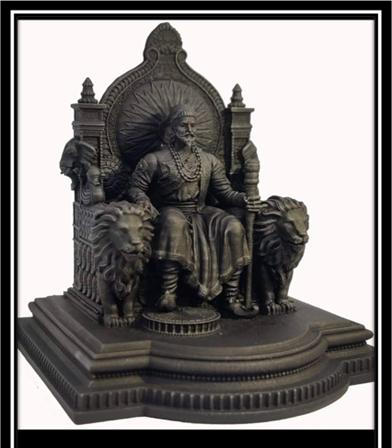
Chhatrapati Shivaji Maharaj Rajyabhishek Throne (1630–1680). Founder of a sovereign Maratha kingdom stretching from Attock to Tanjore, Shivaji Maharaj championed Swarajya—self-rule, freedom from foreign domination, and resistance against slavery, religious persecution, and social humiliation. A brilliant strategist, he developed the famed Shiv Sutra guerrilla tactics and built over 300 forts that still testify to his visionary leadership. Fought Mughal domination under Aurangzeb. He is known for Swarajya, guerrilla warfare, and the protection of Hindu identity.
This statement was not symbolic rhetoric; it formed part of the 1677 Kaul of Gingee, in which Shivaji formally outlawed all forms of slavery within his territories.
Jagannath emphasizes that this single document reveals a historically neglected truth: Bharat was not a passive victim of colonial or internal oppression. It possessed its own deep civilizational resistance to slavery, rooted in cultural ethics and sovereignty. Recovering this history is crucial today, especially for the Netherlands and Suriname, where public discourse often treats slavery and indenture as isolated phenomena. Shivaji’s intervention reveals that both are linked through a shared colonial logic of domination.
II. The Netherlands and its Double Role in Colonial Exploitation
Jagannath highlights that the Dutch were involved in two distinct but interconnected systems. The Indian slave trade via the VOC (Dutch East India Company), Dutch logs, VOC administrative papers, and regional Dutch-Mughal correspondence reveal the purchase and transportation of indentured Indians through the Trans Ocean World.
For example, the creation of the Indentured Labour system in Suriname and Indonesia. When transatlantic slavery was abolished, the Netherlands devised indenture as a new, legally engineered form of coerced or bound labour; bound by the Treaty (Girmit derived from the word Agreement). Besides the Treaty, the Dutch also introduced the penal sanction to control them. However, the Dutch role forms a historical continuum:
• From slave extraction in India to indentured labour in Caribbean and other continents.
• *This is precisely why Girmitiyalogy is not merely an academic discipline; it is a moral obligation to restore suppressed continuity.
• *In Jagannath’s view, Girmitiya descendants must reclaim their historical agency: they did not descend from powerless victims; they came from civilizations with long traditions of freedom and resistance; they inherited a freedom ethic exemplified by leaders like Shivaji Maharaj, Prithvi Raj Chauhan, Mangal Pandey, Mahavir Singh, Jhansi ki Rani, etc.
III. Girmitiyalogy Restoring a Broken Continuum
I hold a deep personal conviction, shaped by the life of my paternal grandfather, Thakur Kishundayal Singh Harnandan Singh Rajput, who was indentured by the Dutch colonial authorities in March 1886 in Chappra, Navada, Bihar, and was never able to return home. He died within five years in Suriname, his health destroyed by the fine dust he inhaled while working as a syrup boiler on the closed sugarcane estate in the district of Saramacca.
A central insight of Girmitiyalogy is that the separation between slavery and indenture is, in many respects, artificial. Both systems were built upon the same ideological foundations, employed similar processes of racialization and dehumanization, and together formed an unbroken chain of labour exploitation across empires. In my view, African enslavement and Indian indentureship are two sides of the same coin. One day, the international human-rights courts will inevitably be confronted with the question of whether Indian indentureship constitutes structural violence and dehumanization amounting to a crime against humanity. However, the descendants of the Girmitiyas must learn to recognise this continuum with clarity and unity. That’s the issue now.
In this broader historical arc, Chhatrapati Shivaji Maharaj represents an early and decisive rupture in civilizational history. His abolition of slavery in 1677 predates European abolitionists by more than a century. Swarajya was the first significant break in the long colonial architecture of human exploitation. Let us all, colonised free citizens globally, acknowledge that the king Chhatrapati Shivaji Maharaj represents an early and decisive rupture in civilizational history.
Today, Girmitiyalogy stands as the intellectual force committed to dismantling the remaining structures of that legacy—restoring dignity, memory, and justice to communities shaped by indenture across the world. Awake, awake and help raise awareness that we are really free.
IV. On the Silencing of British Colonial Crimes Before 1947It is often said that India was forbidden to teach or discuss British colonial crimes after Independence. Jagannath and leading scholars clarify that: There was never a British Indian treaty or clause prohibiting India from teaching colonial crimes committed before 1947. The Indian Independence Act, constitutional debates, and diplomatic archives show no gag order, no memorandum, and no educational restriction. As he pointed out, “What existed was a silence created within India itself. During Jawaharlal Nehru’s period after 1947, the postcolonial state adopted strategies described by scholars as ‘nation-building through forgetting’ (Krishna Kumar), maintaining internal communal harmony after Partition (Guha), and establishing diplomacy within the British Commonwealth (Lall).
As a result, colonial violence scarcely appeared in schoolbooks, plantation crimes remained unaddressed, and the Girmitiya exodus was excluded from mainstream narratives. For the Girmitiyan communities in Suriname, Fiji, Mauritius, Trinidad, Guyana, South Africa and elsewhere, this silence produced generations of ancestral orphanhood—a sense of being cut off from the historical wounds that shaped their identity. Girmitiyalogy seeks to repair that severance. But we have not yet found the right strategy to bring all under one umbrella.
IV Conclusion: Shivaji’s Legacy and the Girmitiya Future
Chhatrapati Shivaji Maharaj’s stand against slavery demonstrates that Bharat possessed an indigenous anti-slavery ethic long before European abolitionism. For Girmitiya descendants across continents, this legacy is essential. Girmitiyalogy extends Shivaji’s civilizational project by breaking colonial silences, reclaiming erased histories, rebuilding ancestral continuity, and restoring the place of Girmitiyas within world history. Swarajya was the first declaration of indigenous freedom. Girmitiyalogy is its modern continuation—restoring identity, dignity, and historical truth. I close now by referring to the slogan “Chelo Jahaji (indentured emigrant) by Brij
Lal. He died on 25 December 2021 in Brisbane, Australia.